


There is a risk of contracting worms without even leaving home.Various types of helminths can be found on household items, banknotes, dishes, food and drinking water.
Parasites enter the human body in a convenient way for them: through the digestive system with food, water, through dirty hands or insect bites.
Helminths then infect certain internal organs, use the resources of the human body, cause mechanical damage and actively multiply.Their life processes are accompanied by unpleasant and often dangerous symptoms and damage to various organs.
How to recognize intestinal helminths
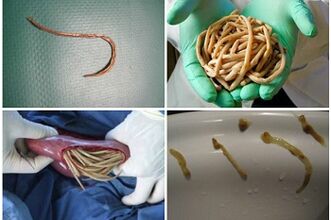
Intestinal helminthiasis includes a group of diseases caused by various types of worms.Most often, ascariasis (roundworms), enterobiosis (spindles), hookworms (hookworms) can be identified.These parasites live in the lumen of the human intestine, feed on its contents, and their presence can be suspected by a number of characteristic symptoms:
- Drastic weight loss without changing diet and physical activity.Helminths of the intestinal group use nutrients from the human body as a source of energy for growth and reproduction, and their attachment devices in the intestine (suction cups, hooks) injure its walls and prevent the absorption of other microelements.
- Pain in the stomach, navel and itching in the rectum are caused by the movement of worms, mechanical damage caused by them, as well as the release of larvae or adults from the body into the external environment.
- Various digestive disorders: diarrhea or constipation, flatulence, the presence of mucus, foam or blood in the stool, nausea, vomiting.In some cases, adult parasites can be found in the feces.
- The human body can react to the appearance of parasites with allergic reactions and intoxication phenomena caused by helminth waste products.More often this is manifested by itching of the skin, redness of certain areas, rashes (vesicles, blisters of various sizes).
Diagnosis of intestinal helminthiasis includes examination of feces, clinical and biochemical blood tests (eosinophilia, leukocytosis) and, if necessary, ultrasound data of the body.
Signs of parasites in the liver
A large amount of nutrients accumulates in the human liver, and intensive blood circulation also occurs, which is convenient for parasites.Common liver helminthiasis: fascioliasis, opisthorchosis, dicrocoeliosis, caused by worms of the liver fluke group.
They can be identified by specific signs:

- Sharp pain in the right hypochondrium is caused by the mechanical action of helminths.Thus, echinococci form cysts in the tissues of the organ, provoking the development of inflammatory processes or even necrosis.
- Adult worms (roundworms) can block the bile ducts, as a result of which the outflow of bile is disturbed, the digestive process in the body becomes difficult and the patient shows signs of jaundice.A person's visible mucous membranes acquire a yellow tint, and with the development of the pathology, the skin also becomes stained.
- Non-specific symptoms of the appearance of parasites will be deterioration of the general condition of the body, weight loss, nausea and lethargy.
To clarify the diagnosis, they donate blood for analysis.Leukocytosis, eosinophilia are detected, and biochemical tests will show an increase in the activity of liver enzymes (ALT, AST).When performing an ultrasound, damage to the liver will be seen in the body: enlargement, inflammation, and in some cases, parasitic cysts can be found.
What does the presence of lungworms mean?
Some parasites (ascaris, toxoplasma, echinococcus, achenura) can enter the human lungs from the gastrointestinal tract through the blood or lymph.They multiply in the alveoli, which makes breathing difficult, and some species (echinococcus unilocular) form cysts, damaging the structure of the organ.
Determining the presence of parasites in the lungs can be difficult, since the symptoms are similar to the manifestations of respiratory diseases of viral and non-infectious etiology (bronchitis, ARVI).Cough, difficulty breathing, chest pain, fever indicate the need for additional examination of the patient's body.
For the diagnosis of pulmonary helminthiasis, the most informative method will be the radiographic method.The photographs will show lesions in the human body caused by echinococci (cysts) and bovine tapeworms (fibrous formations), which must then be distinguished from neoplasms, cysts of different etiology and pneumonia.
Parasites that live in the blood
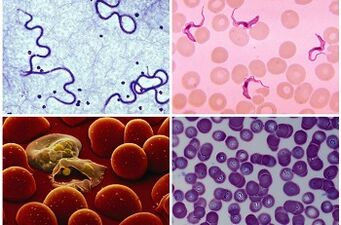
Protozoan unicellular worms can be found in the lumen of blood vessels.Babesia, plasmodia (malarial plasmodia), trypanosomes, microfilariae and schistosomes cause dangerous diseases that pose a threat to human life.
By destroying the formed elements, they disrupt the processes of energy metabolism in the body and block the flow of nutrients to the organs and tissues.
In most cases, human infection occurs after an insect or tick bite.After some time, signs of anemia develop in the body: pallor and then cyanosis of the mucous membranes, dizziness, sudden weight loss and deterioration of health.Without timely medical help, blood parasites can pose a serious threat to human life.
Diagnosis involves performing microscopic blood tests that can detect single-celled parasites and destroyed red blood cells, as well as determine the type of worm.The treatment is long-term and is carried out inpatient under the supervision of a qualified doctor.
Unusual habitats of parasites
Some types of helminths can penetrate the human heart, subcutaneous tissue (dirofilaria), brain and spinal cord (cysticerci, echinococci).You can get infected not only in exotic countries, but also by eating familiar food that has not been properly cooked, and pets can become carriers.Signs of invasion depend on the degree of damage to an organ.
In the brain, worms can form cysts and fibrous formations that cause nervous phenomena.
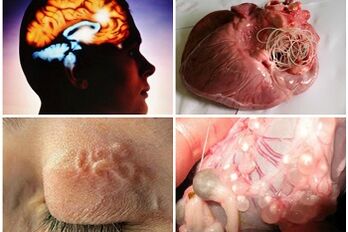
Headache of unknown etiology, tremor (shaking) of the limbs, changes in tactile sensitivity, impaired coordination of movements, sharp deterioration of hearing and vision - the signs of the development of invasion depend on the location of the worms and their larvae.
Adult parasites can be visually detected under the skin, usually accompanied by itching and a tingling sensation, as well as in the eyes, ear canals and other places.
What to do if signs of worm infestation are noticed
Diseases of parasitic etiology are treated under the supervision of a doctor after carrying out all the necessary tests and establishing the type of parasite.Anthelmintic drugs with a narrow or broad spectrum of action are prescribed, general strengthening and symptomatic therapy is carried out, which help to remove worms from the body.In some cases, surgery is indicated.
The prognosis for most diseases is favorable with timely initiation of treatment.If you delay seeing a doctor or start taking medication yourself, the recovery process can be delayed, and many types of parasites can damage vital organs or body systems or even lead to death.